01
Landing page for a new campaign
Marketing is planning a promotion in two weeks. The matching landing page first needs a quote – the campaign often starts before the page is ready.

Starting interface100%
Agency comparison
The agency isn't the problem – the project process is. Why small changes get stuck in quote loops, when project logic is still right and how an ongoing delivery system makes the difference.
Reading time approx. 9 minutes · Last updated 4 Sept 2026
TL;DR
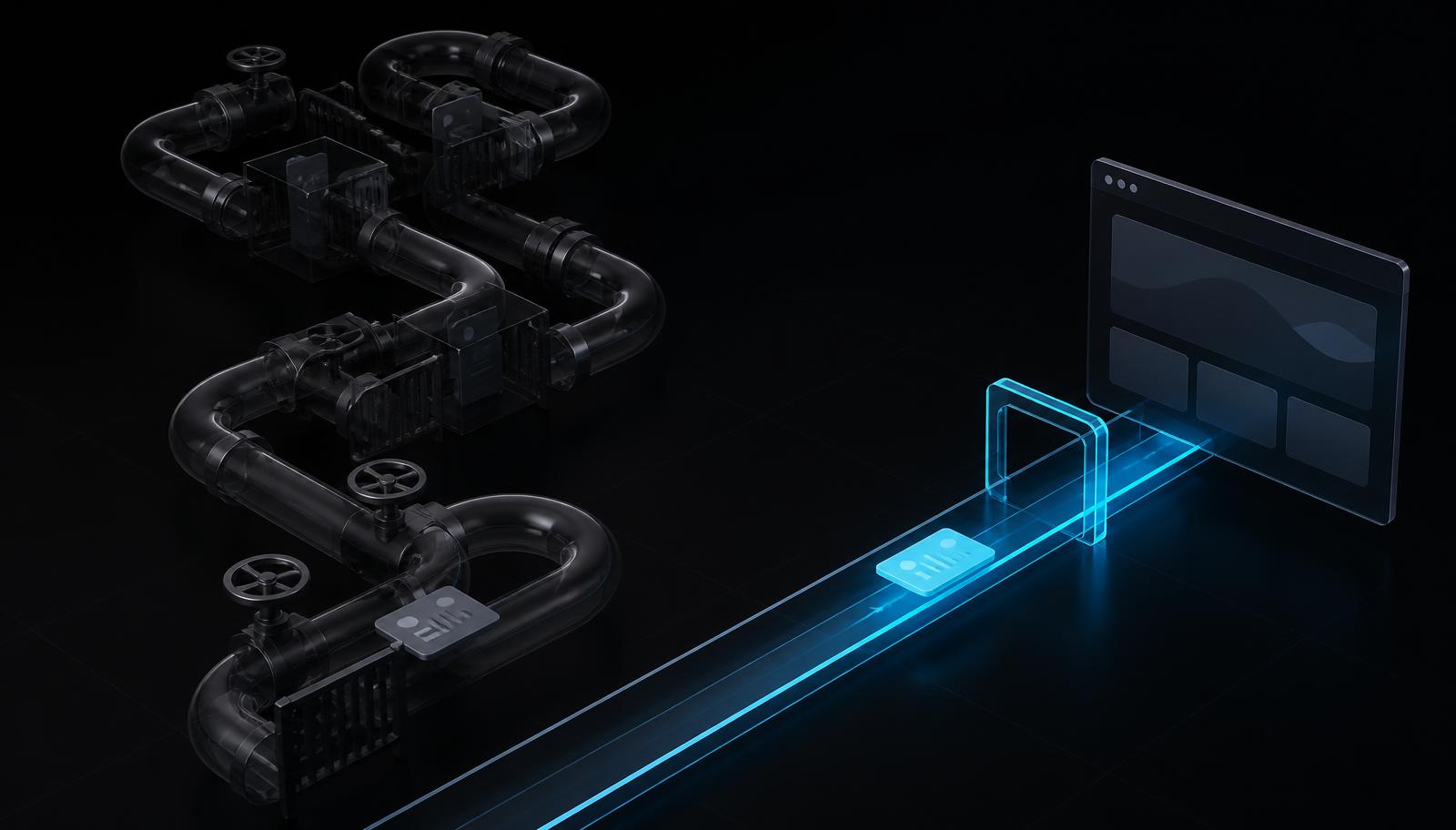
Classic agencies are usually built around projects: briefing, quote, concept, delivery, sign-off. This model works well for clearly bounded initiatives, but can become slow when many small, ongoing tasks pile up. If every change has to be requested, costed, scheduled and approved again, friction builds up. Companies with regular demand for website changes, landing pages, web development or technical adjustments therefore often don't need another one-off project, but an ongoing delivery system. This is exactly where a developer flat, a website flatrate or software development as a subscription can make sense.
Many companies aren't unhappy because agencies do bad work. They're unhappy because the working model no longer fits the demand.
A good agency delivers clean concepts, thoughtful design and solid execution. The problem isn't quality, it's pace: anyone running marketing campaigns today, testing new offers, fixing technical errors, building landing pages and trying out digital ideas needs ongoing speed – not a new project every few months.
This article explains, objectively, how classic agency processes are structured, where they work brilliantly and where they hit their limits. No agency bashing – just an honest assessment of which model fits which kind of work.
A typical agency process follows a clear chain of steps. This structure isn't accidental – it has evolved over years because it makes projects plannable and billable:
This process creates structure, commitment and predictability. But it can become noticeably heavy for small, frequent tasks – not because any single step is wrong, but because the sum of these steps repeats for even the smallest change.
For clearly bounded initiatives, classic project logic is still the right choice. It fits particularly well for:
As soon as a one-off initiative turns into many small, recurring tasks, the same process shows its weaknesses:
These situations are familiar from the daily operations of many companies – not as a criticism, but as a description of where project logic and ongoing demand collide:
01
Marketing is planning a promotion in two weeks. The matching landing page first needs a quote – the campaign often starts before the page is ready.
02
A contact form is losing enquiries. By the time the fix is requested, scheduled and delivered, valuable leads are gone.
03
A seasonal offer needs to be visible immediately. A classic change request often needs more lead time than the promotion itself lasts.
04
A new campaign needs an extra conversion event. The technical change is small, but the path to get there often isn't.
05
A new service should get its own page. Technically that's hours of work, but in a project process it often takes weeks.
06
Customers point out an error in a description. The fix itself is trivial, the route to making it usually isn't.
07
An internal tool should display one extra field. Technically a minor change, organisationally often its own mini-project.
Behind these examples lies a fundamental difference in mindset: agencies typically sell projects. A project has a start, an end and a defined result. That's exactly what the internal organisation is built around – from costing to capacity planning.
But companies increasingly need something else: digital operations. Websites, web apps and digital channels are rarely finished today. They get tested, adjusted, corrected, extended – continuously, not once.
Digital work is therefore no longer just launch, but permanent fine-tuning. Anyone who ignores this and keeps thinking in pure project logic slows themselves down systematically, regardless of how good each individual delivery is.
Cost logic
9
Steps per agency order
From request to invoice – and from scratch again for every change.
5
Steps in a delivery system
Report, triage, deliver, review, approve – no quote loop.
1
Decisive question
Is your demand a project with an end – or an operation without one?
The following table sets both models side by side along the criteria that make the difference in daily practice.
A
B
| Criterion | Classic agency | Ongoing delivery system |
|---|---|---|
| Starting a task | Request, briefing, quote, approval | Submit the task, go straight into delivery |
| Billing | Project price or individual invoice per task | Fixed monthly scope |
| Speed | Depends on quoting and planning cycles | Continuous, no new quote cycle |
| Prioritisation | According to the agency's project plan | According to company needs, aligned continuously |
| Communication | Per project, often new contacts | Continuous, dedicated contacts |
| Demand for change | Treated as a new initiative | Scheduled as an ongoing task |
| Scalability | Limited by project capacity | Flexible within the agreed scope |
| Responsibility | Ends with project sign-off | Remains as long as the collaboration runs |
| Suitable for | Bounded initiatives with a clear end | Regular, recurring delivery demand |
Beyond the classic project agency, several models cover ongoing demand to varying degrees:
How it works
Describe the task briefly, no briefing document.
Priority, scope, questions – in minutes, not meetings.
Straight from the list, no new quote.
Four-eyes principle before go-live.
Short feedback, next task moves up.
Fast delivery isn't an end in itself. Without quality checks, speed can even be dangerous: errors go live, fixes create new errors, responsibilities blur.
Good ongoing delivery therefore needs not just speed but clear processes: proper prioritisation, defined approvals and functioning quality management. Speed without structure is just haste with a different name.
An ongoing delivery system doesn't replace structure with speed – it relocates it: away from repeated quote cycles, towards recurring coordination and review routines.
These signals suggest that a pure project model no longer matches actual demand:
LootSquad sees digital delivery as a continuous process. Companies shouldn't have to buy every small change separately; instead, clear contacts, prioritisation, technical delivery and quality checks should make them faster and more capable of acting.
Classic agencies aren't fundamentally too slow. They just often work according to a project logic that no longer fits ongoing digital tasks optimally. Companies with regular demand need a model that organises changes, technical tasks and development on an ongoing basis.
Because they're built around projects: briefing, quote, approval, scheduling, delivery, sign-off. This structure creates commitment, but it repeats for every small change and adds up to noticeable waiting time.
For clearly bounded initiatives with a defined start, end and budget – such as relaunches, branding projects or complex concept phases. There, project logic remains the right way of working.
Models such as a developer flat, a website flatrate or software development as a subscription reflect ongoing demand better, because changes are scheduled continuously instead of commissioned individually.
Because tasks are submitted and prioritised directly, without needing a new quote, a new approval and new scheduling for every change.
It describes an operating mode in which websites, web apps and digital channels are permanently adjusted, corrected and developed further – instead of being finished once and left unchanged afterwards.
With LootSquad, companies get ongoing digital delivery for websites, web apps and technical tasks. Predictable, structured, with clear contacts.
View developer flatWe use cookies to give you the best possible experience on our website. Some cookies are required to operate the site, others help us improve it and show personalised content. Learn more